

Best Supplements for Wellness Goals: 5 Products Worth Researching (2026 Guide)
Last reviewed: October 2026 · Editorial research by Honest Supplement Picks · Honest Supplement Reviews 2026: What Works?
Disclosure: Honest Supplement Picks may earn a commission if you purchase through links on this page, at no additional cost to you. Our editorial content is intended to provide useful information and does not guarantee results. The affiliate relationship does not change how we describe the evidence.
Searching for the best supplements usually turns up pages that rank products by who pays the highest commission. For a broader look at how we evaluate products, see our guide to honest supplement reviews in 2026. This guide does something different. It looks at five popular products, separates what the brands say from what research supports, and points out what we could not verify.
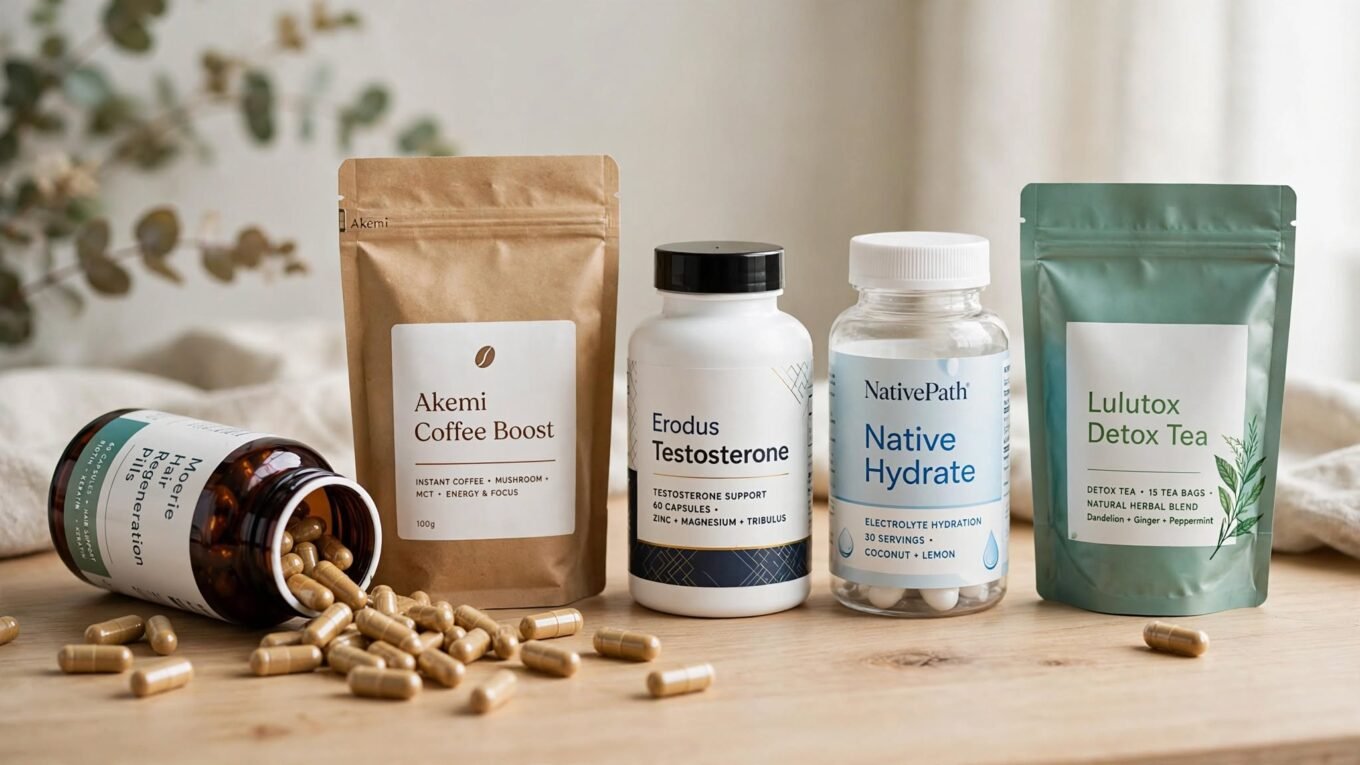
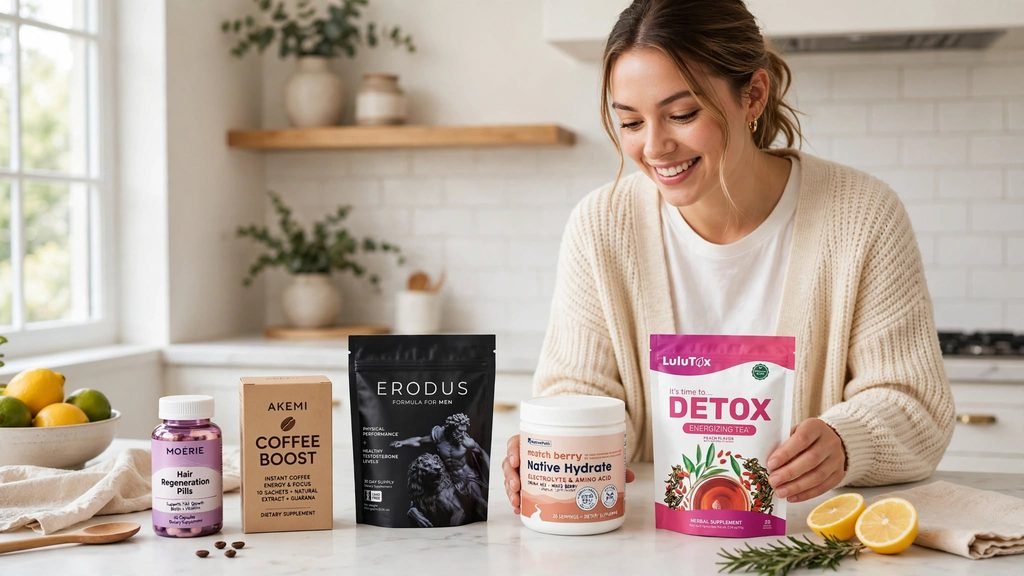
The five products are Moerie Hair Regeneration Pills, Akemi Coffee Boost, Erodus, NativePath Native Hydrate, and Lulutox Detox Tea. They serve very different goals, so this is a comparison of characteristics, not a contest.
By the end you will know how to judge the best supplements for your own situation, what to check on any label, how each product is positioned, where the evidence is strong or thin, and who should talk to a healthcare professional first.
Important note on sources: We did not buy or test these products. Our research relied on retailer listings, brand-supplied descriptions and published scientific literature. For several products we could not locate a complete Supplement Facts panel with per-ingredient amounts. Where that is the case, the text says: “Information was not independently verified.” Always read the label on the package you actually receive, since formulas and listings change.

What Should You Look for in a Dietary Supplement?
When comparing the best supplements, the short answer is a complete Supplement Facts panel, realistic claims, and evidence that matches the exact ingredient and dose in the product.
- Supplement Facts label. It should list every active ingredient with its amount per serving. Be cautious with “proprietary blends” that hide individual amounts.
- Serving size. Compare the serving on the label with the number of servings in the container, since this determines your real monthly cost.
- Evidence quality. A study on an ingredient is not a study on the finished product. Look for randomized controlled trials using a similar form and dose.
- Manufacturer information. A real company name, address, and customer service channel are basic transparency.
- Third-party testing. Seals from independent testers (such as USP or NSF) are meaningful only when you can confirm them on the tester’s own website.
- Safety. Check for stimulants, laxatives, and ingredients with known interactions.
- Price and value. Compare cost per serving. Refund policies matter, but only count them when you can read them in writing.
Under U.S. law, dietary supplements are not approved by the FDA before they are sold, and the FDA does not verify that they work. The agency’s overview is at FDA: Dietary Supplements, and the NIH Office of Dietary Supplements offers a plain-language guide: Dietary Supplements: What You Need To Know.
The 5 Supplements We Examined
These five are not the only best supplements people search for, but they are among the most requested. The numbering below is organizational, not a ranking. Suitability depends on your goal, health, and preferences.
| Product | Primary Focus | Form | Key Ingredients (as listed by sellers; not independently verified) | Best Suited For | Important Considerations |
|---|---|---|---|---|---|
| Moerie Hair Regeneration Pills | Hair, skin and nails nutrition | Capsules | Biotin, B vitamins, vitamin E, selenium, copper, zinc; some listings add CoQ10, fulvic and hyaluronic acid | Adults researching hair-nutrition products | Evidence for biotin is weak in people without a deficiency; hair loss can have medical causes |
| Akemi Coffee Boost | Functional coffee, energy, weight-management positioning | Powder sachets for coffee | Brand-stated list of about 6–7 ingredients; sources disagree (see below) | Regular coffee drinkers wanting a routine add-in | Caffeine amount and doses not verified; no trial on the finished product found |
| Erodus | Men’s testosterone/vitality positioning | Powder drink | Zinc, boron, vitamin D3, magnesium, selenium, tongkat ali, ashwagandha, fenugreek and others | Men curious about ingredient-based support | Evidence is limited; low testosterone needs medical evaluation |
| NativePath Native Hydrate | Hydration and electrolytes | Powder drink mix | Electrolytes (sodium, potassium, magnesium), amino acids incl. BCAAs; stevia-sweetened | Active adults or people wanting a zero-sugar electrolyte mix | Most people hydrate adequately with water and food |
| Lulutox Detox Tea | “Detox” and weight-management positioning | Tea bags | Promotional pages mention senna leaf, ginger, dandelion, green tea, lemongrass | Adults who enjoy herbal tea | Senna is a laxative; “detox” is a marketing term |
1. Moerie Hair Regeneration Pills
Product: Moerie Hair Regeneration Pills (affiliate Offer ID 4112) Category: Hair-focused dietary supplement Primary purpose (per brand): Support hair, scalp, skin and nail wellness from within Form: Capsules; retailer listings show 60-, 120- and 180-count sizes Key ingredients (retailer-listed): Biotin, vitamins B6, B9 (folic acid), B12, vitamin E, selenium, copper, zinc. Some listings also mention coenzyme Q10, fulvic acid and hyaluronic acid. Listings differ, and one marketplace listing even includes caffeine and coconut oil. Per-ingredient amounts were not independently verified. Available market (affiliate offer): US, CA, UK, IE Evidence considerations: See below Potential benefits: Contributes vitamins and minerals involved in normal hair and skin biology Limitations: No published trial of this specific product was found Safety considerations: Biotin lab-test interference; mineral excess
What it is and what the brand says
Moerie markets a beadlet-based capsule meant to support “thicker, fuller-looking” hair. Some retail titles use language like “hair loss treatment.” We do not repeat that wording, because supplements are not approved to treat medical conditions, and no source we reviewed showed that this product regrows hair.
What the evidence says about the ingredients
- Biotin: The NIH Office of Dietary Supplements notes that biotin deficiency can cause hair thinning, but there is little reliable evidence that extra biotin grows hair in people who are not deficient. See the NIH ODS Biotin fact sheet.
- Zinc, selenium, copper, B vitamins, vitamin E: Needed for normal body function. Correcting a true deficiency may help, but additional intake beyond need has not been shown to improve hair in healthy people.
- Fulvic acid, hyaluronic acid, CoQ10: We found no strong human trials showing hair benefits from oral use at the doses typically found in supplements.
Customer reviews on retail sites claim hair growth of several inches in one or two months. That is far faster than the roughly half inch per month commonly cited as typical scalp hair growth, so treat such testimonials as anecdotes, not evidence.
Safety considerations
- Lab test interference: The FDA has warned that biotin can cause falsely high or low results in certain blood tests, including troponin tests used in heart attack diagnosis. Tell your clinician if you take it. See the FDA safety communication.
- Mineral excess: Too much selenium can itself cause hair loss, per NIH ODS. Check total intake from all supplements and multivitamins.
- One buyer review mentions nausea; individual tolerance varies.
Who may want to research it, and who should ask a professional first
Adults whose diet may be limited, or who want a general hair, skin and nails multivitamin-style product, may consider researching it. Anyone with sudden, patchy or rapid hair loss, scalp symptoms, pregnancy, or who takes medications or has upcoming lab work should speak with a doctor or dermatologist first, since hair loss often has treatable causes such as thyroid problems, iron deficiency, or hormonal changes.
Buying considerations
Confirm the exact Supplement Facts panel for your region (US, CA, UK and IE labels may differ). Be wary of marketplace sellers with inconsistent listings. Refund terms and pricing were not independently verified.
[AFFILIATE LINK – Offer ID 4112: “See the manufacturer’s current product information”]
2. Akemi Coffee Boost
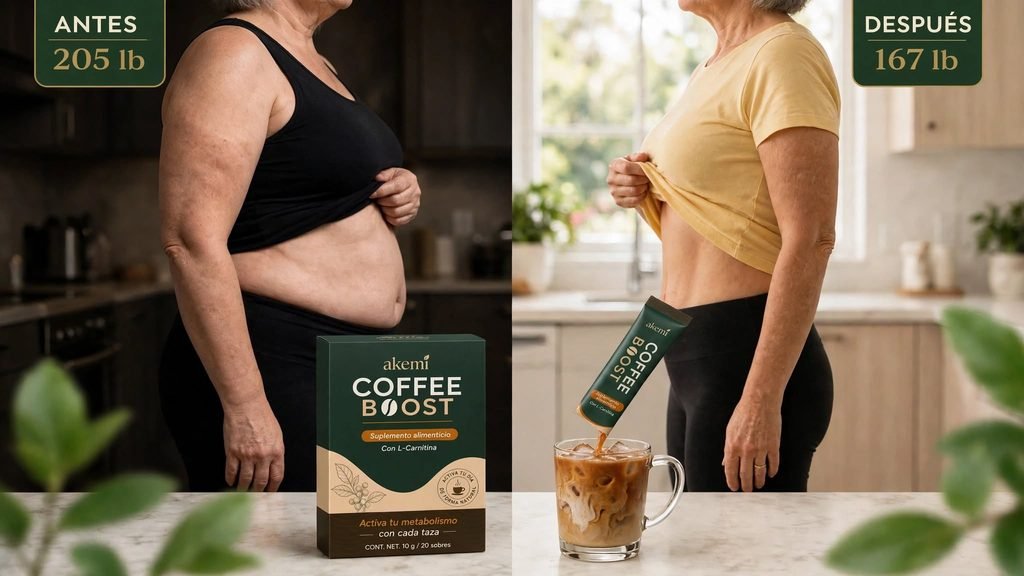
Product: Akemi Coffee Boost (affiliate Offer IDs 4896, 4895 and others) Category: Functional coffee add-in / energy and weight-management positioning Primary purpose (per brand): Add a functional sachet to coffee to support energy and appetite or metabolic goals Form: Single-serve powder sachets (one retail description mentions a 20-sachet box) Key ingredients: Sources disagree. One review describes a brand-stated seven-ingredient formula; another page describes six, including green coffee extract, green tea polyphenols, L-carnitine and Arabica instant coffee. Not independently verified. Available market: Varies by affiliate Offer ID; check the specific offer Evidence considerations: Ingredient-level research only Potential benefits: Convenience; caffeine-driven alertness Limitations: No Supplement Facts panel with per-ingredient doses was found, except for caffeine claims that we could not confirm Safety considerations: Caffeine; stimulant sensitivity
Positioning and claims
Akemi is positioned as a coffee mix that supports weight management. We do not describe it as a weight-loss solution. A review we read candidly noted that its metabolic claims trace back to individual ingredients and general research, not to a clinical trial of the finished product. Several forum-style pages repeating Akemi copy are promotional and carry no independent data. We did not use them as evidence.
What the evidence says
- Caffeine: Reliably increases alertness. Its effect on long-term body weight is small and inconsistent.
- Green tea/green coffee extracts: Studies show modest or inconsistent effects on weight. The NIH ODS reviews weight-loss supplements generally and concludes that few have solid evidence of meaningful benefit: NIH ODS: Dietary Supplements for Weight Loss. NCCIH also notes rare reports of liver problems linked to concentrated green tea extracts: NCCIH: Green Tea.
- L-carnitine: Evidence for fat loss in healthy adults is limited and mixed.
Caffeine considerations
The FDA says that up to 400 mg of caffeine a day appears not to be generally associated with dangerous effects for healthy adults, but sensitivity varies. See FDA: How Much Caffeine Is Too Much?. The sachet’s caffeine content was not independently verified, so add it to the caffeine from your coffee itself.
Who should be cautious
People who are pregnant or breastfeeding, who have heart rhythm problems, anxiety, insomnia, high blood pressure, or who take stimulant or blood-pressure medication should consult a clinician first. Avoid late-day use if caffeine disturbs your sleep.
Buying considerations
Request the full Supplement Facts panel and caffeine per sachet before purchase. Pricing and guarantees were not independently verified.
[AFFILIATE LINK – Offer ID 4896: “View the current product details”]
3. Erodus Testosterone
Product: Erodus (affiliate Offer ID 4021) Category: Men’s testosterone/vitality-support supplement Primary purpose (per brand): “Support healthy testosterone levels,” energy, libido and recovery Form: Powder to mix into a drink (per third-party descriptions) Key ingredients (third-party descriptions): Zinc, boron, vitamin D3, magnesium, selenium, tongkat ali (Eurycoma longifolia), ashwagandha, fenugreek, CoQ10, lion’s mane. The ingredient count is reported as 16 in one source and 19 in another. Not independently verified. Available market (affiliate offer): US Evidence considerations: Ingredient-level, mixed Potential benefits: May supply nutrients; possible small effects in specific groups Limitations: No evidence the finished product raises testosterone Safety considerations: Interactions; liver reports for ashwagandha
Marketing claims versus evidence
| Claim type | Example | Status |
|---|---|---|
| Marketing claim | “Clinically dosed,” “no proprietary blends,” “full transparency” | Not independently verified |
| Marketing claim | Usable “alongside GLP-1 medications” | Not verified. Discuss with your prescriber |
| Ingredient evidence | Zinc and vitamin D may matter for men who are deficient | Reasonable, but benefit in non-deficient men is unclear |
| Clinical evidence | A published review of popular testosterone supplements | Found no whole-product randomized trials |
| Proven outcome | That Erodus raises testosterone | Not established |
A systematic review in the International Journal of Impotence Research analyzed 37 ingredients in popular testosterone and erectile-dysfunction supplements. It found that no whole supplement products had published randomized trials, and that about 68% of ingredients received weak, contradictory, or lacking evidence ratings. See the PubMed abstract. That doesn’t mean every ingredient is useless, but it does mean you shouldn’t assume a multi-ingredient formula produces the results its ads imply.
Supporting normal physiology versus treating low testosterone
A supplement may provide nutrients that the body uses in normal hormone function. It does not diagnose or treat low testosterone (hypogonadism), which requires blood tests and medical evaluation. Fatigue, low libido and low mood have many possible causes, including sleep apnea, depression, thyroid disease, and medications.
Safety considerations
Ashwagandha has been linked to rare reports of liver injury; see the NIH LiverTox database. Zinc, selenium and vitamin D can cause problems in excess. Fenugreek and other herbs may interact with diabetes or blood-thinning medications.
Who should consult a professional
Anyone with persistent symptoms, men over 40 with changes in energy or sexual function, people with liver, prostate, heart or thyroid conditions, anyone who takes prescription medications (including GLP-1 drugs), and anyone planning a fertility evaluation.
[AFFILIATE LINK – Offer ID 4021: “See the manufacturer’s current information”]
4. NativePath Native Hydrate
Product: NativePath Native Hydrate (affiliate Offer ID 3570) Category: Hydration / electrolyte supplement Primary purpose (per brand): Zero-sugar electrolyte and amino-acid drink mix to support hydration Form: Powder; retailer listings mention 30 servings, peach mango and tangerine flavors Key ingredients (retailer listing): Sodium, potassium and magnesium; “14 vitamins and minerals,” “9 essential amino acids,” and 2,000 mg BCAAs; sweetened with stevia leaf extract. Per-ingredient electrolyte amounts were not independently verified. Available market (affiliate offer): US Evidence considerations: Electrolyte science is well established. Product-specific benefit claims are not. Potential benefits: Replaces sodium, potassium and magnesium lost in sweat; zero sugar Limitations: Unneeded for many people; amino-acid claims are less established Safety considerations: Sodium, potassium, kidney and blood-pressure issues
Positioning
This is the most conventional product in our comparison: an electrolyte drink mix. Some promotional articles go further, tying it to bladder control or a “US Army breakthrough,” or calling it “safe and effective” for seniors. We could not verify those claims and they do not appear in the reliable sources we found, so we do not repeat them.
When electrolyte supplementation may be relevant
Electrolytes can matter during prolonged, sweaty exercise, in hot conditions, or during short illnesses involving fluid loss. For typical daily activity, water and a normal diet usually cover electrolyte needs. Whether BCAAs add benefit for hydration is unclear. Hydration claims should be read as support for fluid balance, not as a treatment.
Safety considerations
Check sodium and potassium per serving, particularly if you have kidney disease, heart failure, high blood pressure, or take ACE inhibitors, ARBs, or potassium-sparing diuretics. Persistent thirst or excessive urination can signal medical problems and deserves a doctor’s visit, not a powder.
Buying considerations
Compare cost per serving, confirm the flavor and size you are ordering, and read the real label. Free-trial or subscription terms mentioned by some sellers were not independently verified.
[AFFILIATE LINK – Offer ID 3570: “Check the official product information”]
5. Lulutox Detox Tea
Product: Lulutox Detox Tea (affiliate Offer ID 1452) Category: Herbal “detox” tea with weight-management positioning Primary purpose (per brand): Digestive support, “cleansing,” wellness routine Form: Tea bags (peach-flavored per one description) Key ingredients (promotional pages): Senna leaf, ginger, dandelion, green tea, lemongrass; some mention milk thistle. Formulas “can differ.” Not independently verified. Available market (affiliate offer): Global Evidence considerations: Ingredient-level and weak for weight loss Potential benefits: Hydration from a warm drink; senna can relieve occasional constipation Limitations: No evidence “detoxing”; weight change is likely fluid Safety considerations: Laxative effects, dependence, electrolyte loss
What “detox” means here
In marketing, “detox” usually implies removing toxins. The body already clears waste through the liver, kidneys, and gut, and we found no credible evidence that a tea increases toxin removal in healthy people. We treat “detox” as a branding term, not an established process.
What the evidence says
- Senna is a stimulant laxative. The NCCIH advises short-term use for constipation and notes that long-term use is not recommended: NCCIH: Senna. Any quick scale drop from a laxative reflects water and stool loss, not fat loss.
- Dandelion has mild diuretic traditional use; human evidence is limited.
- Green tea: Effects on weight are small and inconsistent; see the NIH ODS weight-loss fact sheet above.
- Ginger, lemongrass: Used for flavor and traditional digestive comfort; weight-loss evidence is lacking.
Weight-management claims
We do not promise fat loss or rapid weight loss. Even the more cautious promotional pages we saw concede that a detox tea is not a miracle weight-loss solution.
Safety considerations
Diarrhea, cramping, dehydration and electrolyte imbalance can occur with laxative use. Avoid if you are pregnant, breastfeeding, have bowel conditions, take diuretics, heart medications or blood thinners, or have a history of disordered eating. Laxative use for weight control is a red flag worth discussing with a professional.
Buying considerations
Look for a full ingredient list with amounts (especially senna), the intended duration of use, and written return terms. These were not independently verified for Lulutox.
[AFFILIATE LINK – Offer ID 1452: “Learn more about the formula”]
How These Supplements Compare
There is no universal winner here, and no single product is the best supplements pick for everyone. These products solve different problems.
| Factor | Moerie | Akemi | Erodus | Native Hydrate | Lulutox |
|---|---|---|---|---|---|
| Main purpose | Hair/skin nutrition | Energy, weight positioning | Male vitality | Hydration | “Detox,” digestion |
| Format | Capsule | Sachet | Powder drink | Powder drink | Tea bag |
| Label transparency found | Partial | Limited | Partial | Partial | Limited |
| Evidence level | Weak to moderate for deficiency only | Caffeine solid, rest limited | Limited | Strong for electrolytes, limited for extras | Weak, except senna’s laxative effect |
| Convenience | Daily pill | Fits coffee routine | Needs mixing | Needs mixing | Brew daily |
| Main limitation | Little proof for non-deficient users | Unknown doses | No whole-product trial | Often unnecessary | “Detox” is unproven |
| Key safety flag | Biotin lab interference | Caffeine | Interactions, liver reports | Sodium/potassium | Laxative effects |
When judging the best supplements, transparency was the main differentiator in our research: for none of the five could we confirm a full label from a primary source, so check the package yourself.
How to Choose the Best Supplements for Your Goal
The best supplements for you depend on your goal, diet, health and medications. Use this framework:
- Hair-related nutrition: First ask a clinician whether a deficiency or medical cause could be involved. Then compare multivitamin-type products by amounts of biotin, zinc, selenium and iron, and avoid stacking several products with overlapping minerals.
- Energy: Review sleep, diet and total caffeine first. If you choose a caffeinated product, confirm the caffeine per serving and stay within a level your clinician considers appropriate.
- Hydration: Match the product to the situation. For long, sweaty workouts, sodium and potassium per serving matter more than extras. For everyday thirst, water is usually enough.
- Testosterone support: Get symptoms evaluated first. A blood test can show whether levels are actually low. If you decide to try a supplement, look for ingredient amounts that match human trials, and retest with your doctor’s guidance.
- Weight management: No supplement should be presented as a guaranteed solution. Look for randomized trials of the finished product, long follow-up, and clear safety data. Evidence-based foundations remain nutrition, activity, sleep, and, when appropriate, medical care.
For more detail on how we judge products, read our honest supplement reviews for 2026.
Are the Best Supplements Safe? Understanding Dietary Supplement Safety
Even the best supplements can offer benefits and still carry risks. “Natural” does not mean harmless. Key points from NIH ODS and FDA guidance:
- Ingredients can interact with prescription drugs (for example, with blood thinners, diabetes drugs, or blood-pressure medication).
- More is not always better, and high doses of some vitamins and minerals are harmful.
- Products can contain different amounts than the label states, which is why independent testing matters.
- Report side effects to a healthcare professional and to the FDA through MedWatch.
Talk with a doctor, pharmacist, or registered dietitian before starting a supplement, even one that appears on lists of the best supplements, particularly if you are pregnant, take medications, or have a medical condition.
What the Evidence Actually Says About the Best Supplements
Before calling any product one of the best dietary supplements, check which of these evidence levels applies to its claims.
Stronger evidence
- Electrolytes (sodium, potassium, magnesium) have important physiological roles.
- Correcting true deficiencies (such as biotin, zinc, vitamin D) can improve related symptoms.
- Caffeine increases alertness in most adults.
- Senna works as a short-term laxative.
Limited evidence
- Tongkat ali, fenugreek, boron and ashwagandha for testosterone or sexual function have small or inconsistent trials.
- BCAAs for hydration.
Mixed evidence
- Green tea and green coffee for weight management.
- L-carnitine for fat loss in healthy adults.
- Zinc and vitamin D for testosterone in non-deficient men.
Manufacturer claims requiring further verification
- That Moerie regenerates or regrows hair.
- That Akemi supports appetite or metabolism at its actual dose.
- That Erodus uses “clinically dosed” ingredients with no proprietary blend.
- That Native Hydrate supports bladder control or was derived from a military finding.
- That Lulutox detoxifies the body or causes weight loss.
Frequently Asked Questions
What are the best supplements to consider? There is no single answer. The best supplements for you are the ones that match a real need, list ingredient amounts clearly, have human evidence behind them, and are safe given your health and medications.
What should I look for in a dietary supplement? A complete Supplement Facts panel, ingredient amounts, realistic claims, third-party testing you can verify, and safety information.
Are dietary supplements FDA approved? No. Even the best supplements are not approved by the FDA before sale. It can act against unsafe or mislabeled products after they reach the market.
How can I tell whether a supplement claim is supported by evidence? Before trusting any list of the best supplements, search PubMed for the ingredient and dose, and look for randomized controlled trials in people similar to you. Testimonials and “studies show” without citations are not evidence.
Can supplements interact with medications? Yes. Herbs like senna, fenugreek and green tea extract, and minerals like potassium, can interact. Ask a pharmacist.
Are “detox” supplements proven to remove toxins? No credible evidence shows that detox teas remove toxins beyond what the liver and kidneys already do.
Can supplements replace a healthy diet? No. They are intended to supplement, not replace, food.
How should I compare supplement ingredients? Compare amount per serving, form, and the dose used in human studies, and count total daily intake from all sources.
Are supplements safe for everyone? No. Pregnancy, kidney or liver disease, heart conditions, and medications all change the risk.
How long does it take for supplements to work? It varies, and some may do nothing noticeable. Hair changes, for example, are slow because of the hair cycle. Judge results with objective measures, not hype.
Should I talk to a doctor before taking a supplement? Yes, even for the best supplements, and especially if you take medications, are pregnant, or have symptoms you are trying to address.
Final Thoughts
The best supplements are the ones that match a real need, have honest labels, and have evidence behind their ingredients and doses. In this comparison, Native Hydrate is the most conventional product in terms of science, Moerie and Erodus rely heavily on ingredient-level research with limited proof for the finished products, and Akemi and Lulutox lean on weight-management and “detox” language that deserves the most skepticism.
Whenever you search for the best supplements again, check the Supplement Facts panel, read the evidence, consider your medications and health history, and ask a professional. If a claim sounds too good to be true, it probably is.
Next step: Use this guide to the best supplements as a starting point, then review each manufacturer’s current official information before deciding. Prices, formulas, and policies change, and we did not independently verify them.
One thought on “Best Supplements for Wellness Goals: 5 Products Worth Researching (2026 Guide)”